Wat Tyd Is · What Time Is · 5 / 20
Anxiety Is Temporal
Dread is time-travel to a future that has not happened. Here is the return ticket.
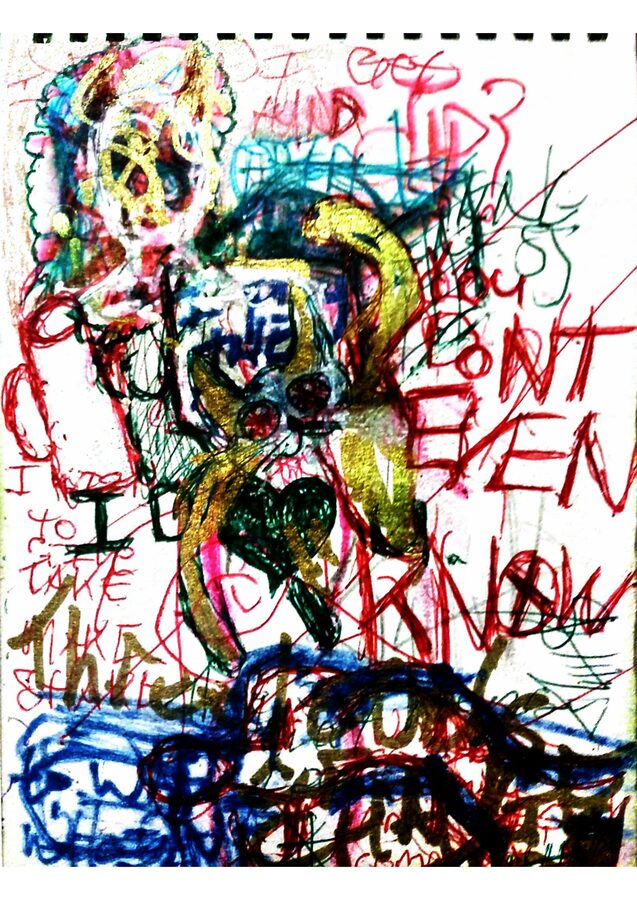
Notice where you are when you are afraid. Not the room — your body is plainly in the room, in the chair, with the cold cup of tea going colder. Notice where you are. You are somewhere else entirely. You are three weeks from now, in the difficult conversation. You are in the diagnosis that has not been given, the email that has not been sent, the version of your life where the worst has already arrived. Anxiety is not a mood that visits you in the present. It is a place you travel to. And the strange thing about the journey is that it takes you to a future that has not happened.
Dread Is Time-Travel
Earlier in this book I argued that time is not a thing you can hold, but a relational field — the medium in which change occurs. The present, on that view, is never thin. It is thick with the past and heavy with the future, and part of what it means to be conscious is to carry both at once. Ordinarily this thickness is a gift. It is why a promise made yesterday still binds you today, and why you can lean into tomorrow to plan a meal or a marriage.
Anxiety is that same capacity running hot. It takes the future's rightful weight and lets it fall entirely into the now. The nervous system, which cannot tell a rehearsed catastrophe from a real one, responds to the imagined future as though it were present. Your heart quickens for a threat that exists only as a coordinate you have not yet reached. This is why dread feels so physical and so absurd at once. The body is honest; it simply believes the itinerary you handed it.
The Future That Has Already Collapsed
There is a further move I want to name, because it is where anxiety becomes a trap rather than a warning. In these pages I have called the structure of time temporal density — the dimension in which several possible futures coexist before collapsing into the one you actually live. Consciousness is precisely the capacity to navigate that spread of possibility. To be free is to stand among the branches and choose.
Anxiety pretends the collapse has already happened. It selects one branch — the ruinous one — and treats it as settled fact, as though the future were behind you rather than ahead. You do not stand among possibilities; you stand in the wreckage of a single imagined one and call it foresight. And because it feels like knowledge, it is hard to argue with. But it is not knowledge. It is a loop: you return, as you might return to an old argument you swore you had resolved, to a future you have visited so often it feels like a memory.
Anxiety collapses the future into a single ruinous branch and then mourns it as though it were fixed. But the branch has not been chosen. You are still standing where the paths divide.
The Return Ticket
If dread is a journey, there is a way back — and it is not the fantasy of escaping time altogether, which only detaches you from your life. The return is to the thick present, the only place from which navigation is actually possible.
Recall that freedom requires time: choice needs a gap between impulse and action, and urgency destroys that gap. Anxiety works by compression, by making everything feel like now, now, now. So the antidote is not to think harder about the feared future — that only books another ticket to it. The antidote is to restore the gap. Return your attention to what is genuinely present: the weight of your feet, the temperature of the air, the fact that the catastrophe is, at this moment, not occurring. From there the future stops being a place you are trapped inside and becomes again what it truly is — a field of branches, none of them yet chosen, waiting for the navigator to arrive. You do not control the river. You learn where you are standing in it.